

Case Study 1: Transforming Enterprise Travel Benefits: How Strategic UX Research Generated $16M Monthly Revenue
Jump to a Section:
The Challenge That Everyone Missed
When I took over the USAA travel benefits platform project, the surface problem seemed straightforward: outdated design, low member utilization due to complexity resulting in low travel bookings. But deeper investigation revealed a perfect storm of systemic issues that previous teams had either overlooked or underestimated.
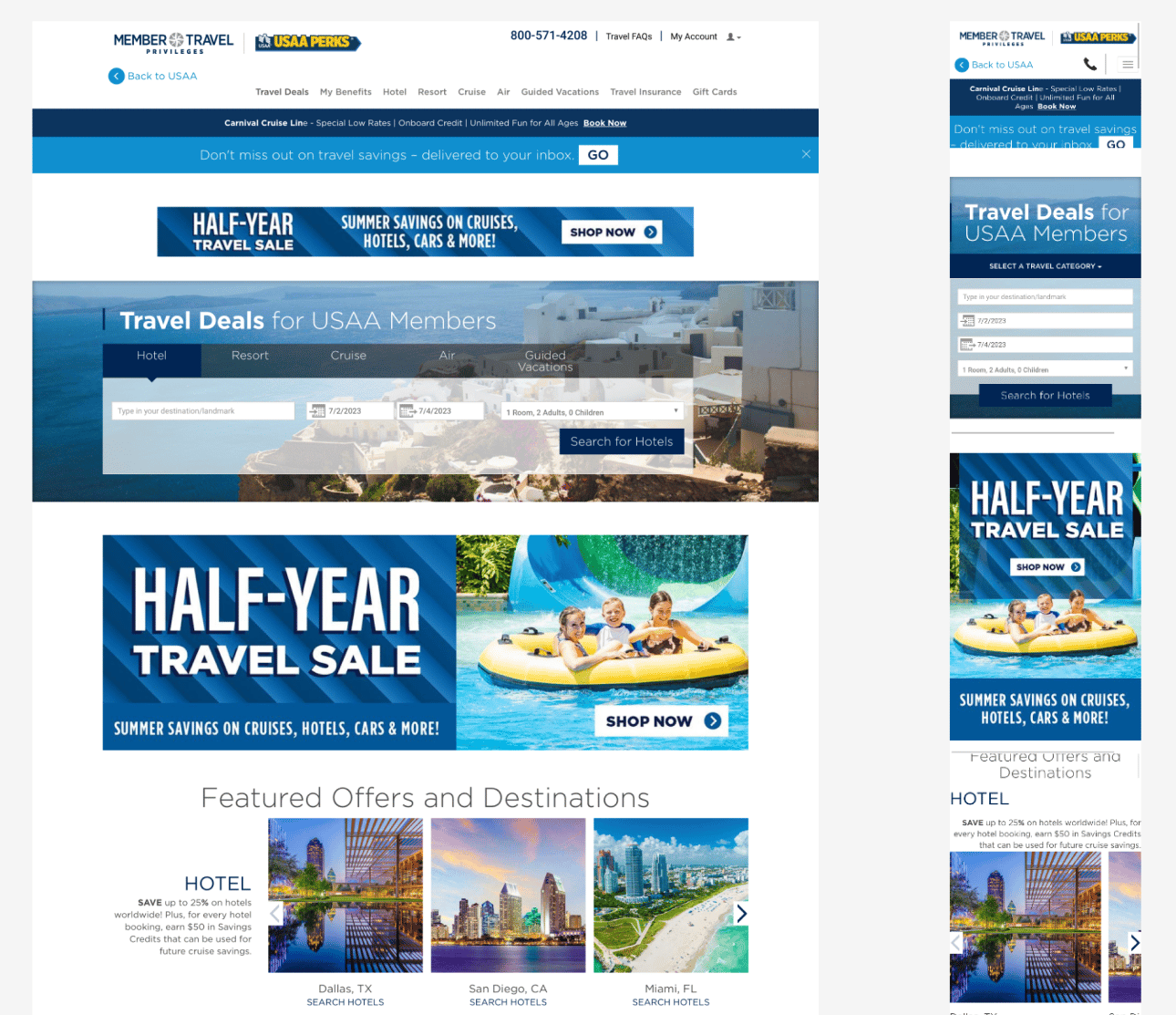
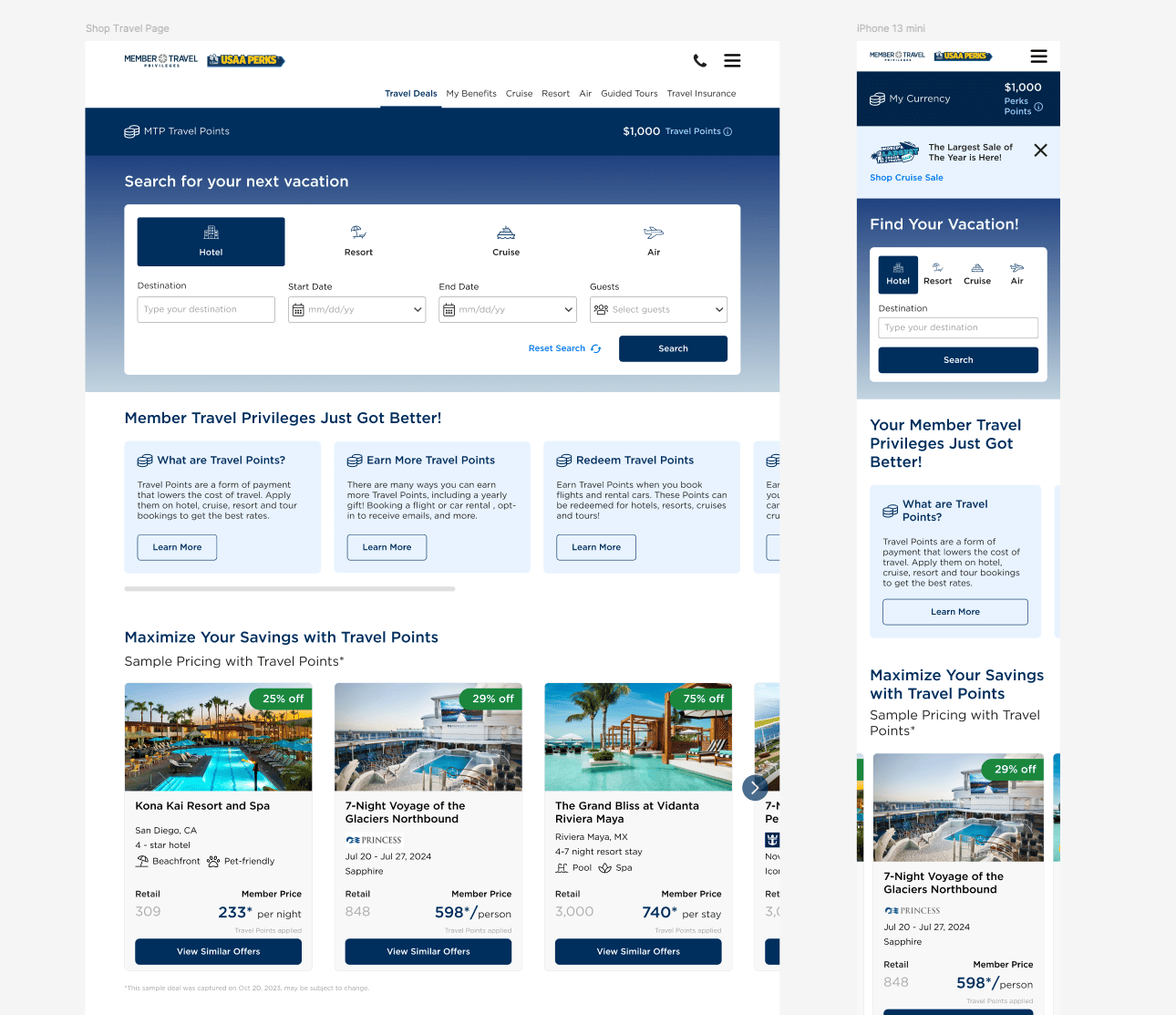
The platform served 4M+ monthly active users across Fortune 500 clients like USAA and American Express, yet conversion rates were stagnating. More critically, 88% of users were accessing the platform on mobile devices (60% on iPhone Safari), but the entire experience was optimized for desktop. A previous outsourced project had failed to deliver, burning budget and stakeholder confidence.
The Real Problem: This wasn't a simple refresh—it was a fundamental mismatch between user behavior and technical architecture, compounded by fragmented user journey documentation that missed critical upstream and downstream interaction opportunities for membership, marketing and booking travel.
“Travel inspirations and triggers start off-platform in marketing (digital and paper), social media, reminiscing, etc. and the journey needs to connect those triggers with inspirational and contextual queues to accelerate the purchase phases”
Original Site
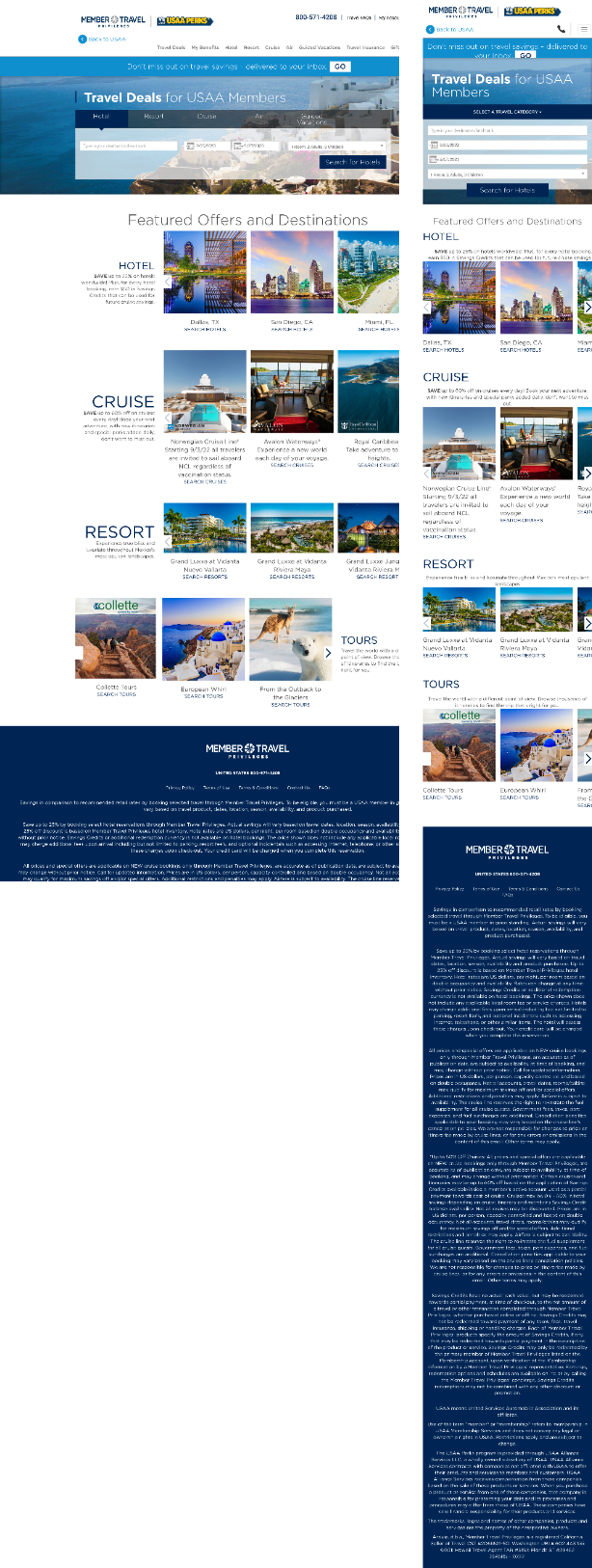
New Design

Strategic Research & Discovery
Rather than jumping into visual design, I led a comprehensive research initiative that uncovered the true scope of transformation needed. Through systematic heuristic evaluation, user journey mapping, and cross-functional stakeholder interviews, and pages of notes from Account Management, we identified that the issues ran deeper than anyone realized.
Key Research Insights:
- Mobile Safari Optimization Needs: 60% of users were experiencing responsive design bugs specifically in Safari Mobile, the platform's primary browser
- Journey Fragmentation: Documentation covered isolated touchpoints but missed the complete user journey from pre-shopping engagement, such as digital marketing, through post-travel reflection
- Conversion Friction Points: Users abandoned at predictable moments due to hidden pricing & fees, unrefined navigation, and trust indicators
- Accessibility Barriers: Non-compliance was creating legal risk while excluding users with disabilities on contrast, keyboard navigation and screen readers
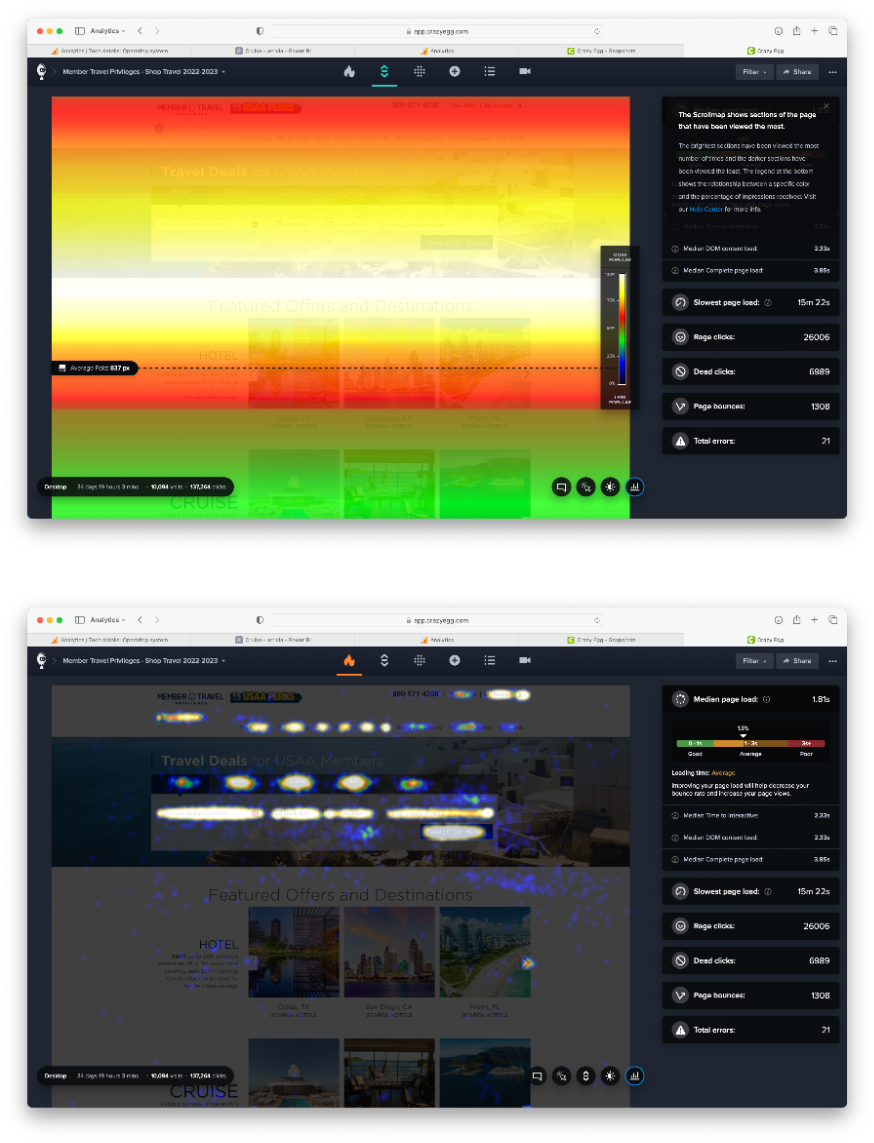
Figure: Understanding Landing page & Membership Engagement with Analytics
- Key Insight 1 - Users rarely went below the fold
- Key Insight 2 - Majority of users shopped on Mobile & Purchased on Desktop
- Key Insight 3 - Large traffic variance of Price Compare sessions vs. Checkout sessions
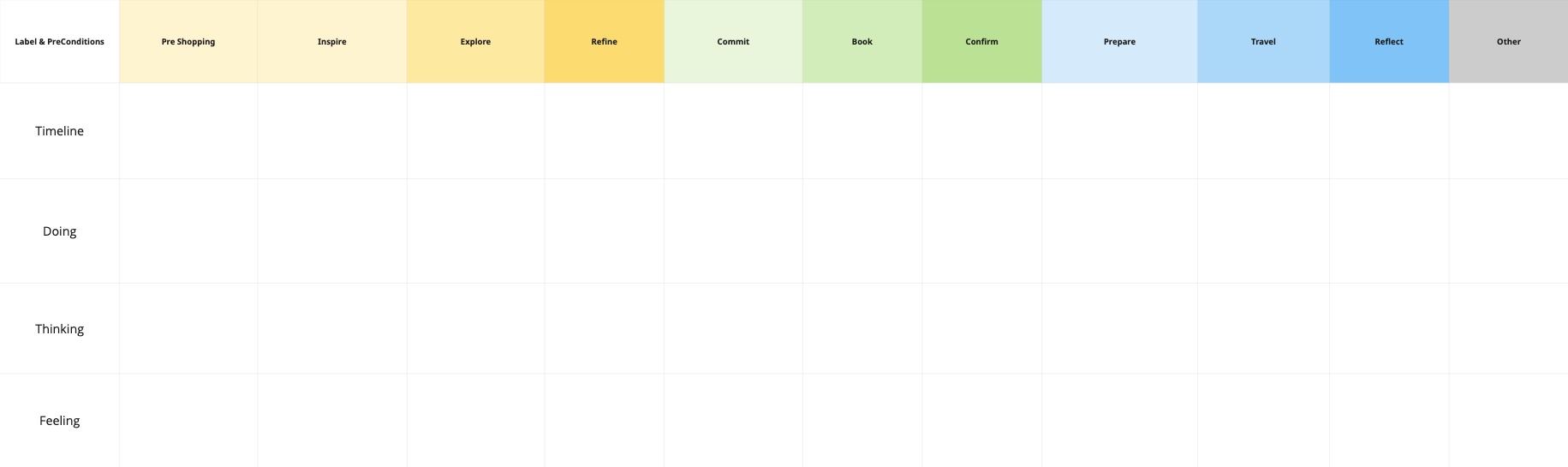
Technical UX Deep Dive: I designed a comprehensive user journey framework spanning 12 distinct phases: Pre-conditions, Pre-shopping, Inspire, Explore, Refine, Commit, Book, Confirm, Prepare, Travel, Reflect, and edge case handling. This systematic approach revealed interaction opportunities that previous teams had completely missed. The project release didn’t address them all but were incorporated them strategically into the Product Roadmap.
Figure: Journey Map Template for all UX activities as a starting point
- Template surfaces key emotional phases in the travel decision making
- Travel inspirations and triggers start off-platform in marketing (digital and paper), social media, reminiscing, etc. and the journey needs to connect those triggers with inspirational and contextual queues to accelerate the purchase phases
- At every point in the journey, is an opportunity to engage
Cross-Functional Execution Strategy
Success required orchestrating a complex transformation across Legal, Marketing, Sales, Product, Technology, and InfoSec teams while rebuilding stakeholder confidence after previous project failures.
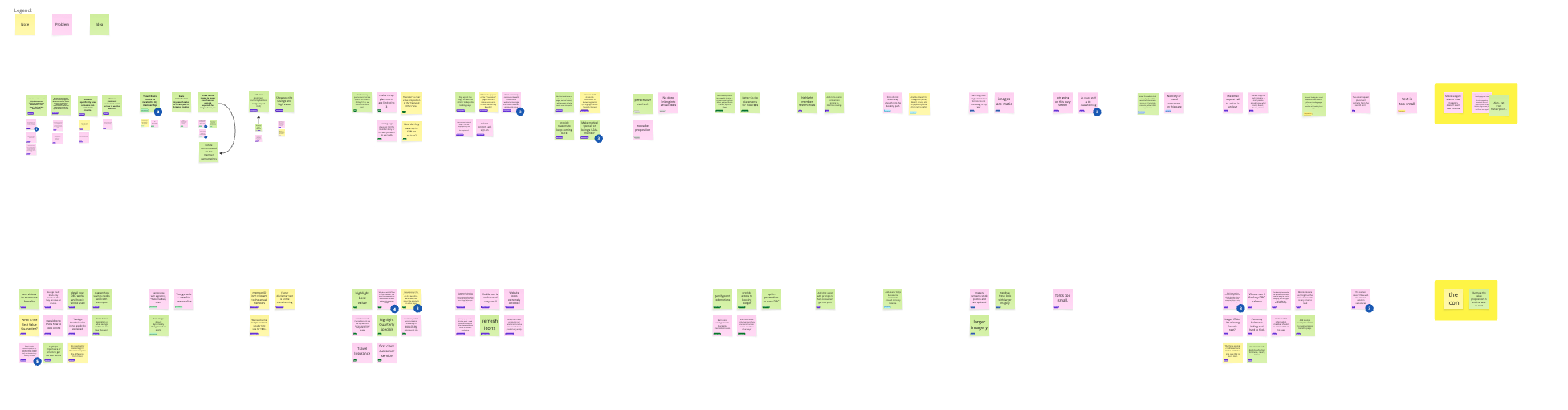
Figure: Stakeholder workshop prioritization affinity on Membership Benefits, a Core Value Proposition
Project Architecture:
- Dual Leadership Role: Served as both Project Owner and active UX contributor
- Agency Partnership: Augmented internal team capacity (80% allocated to parallel initiatives) with external UX agency
- Iterative Validation: Implemented 3 rounds of research from low-fidelity to high-fidelity design validation
- Mobile-First Technical Strategy: Prioritized Safari Mobile optimization and responsive design excellence
- Enterprise scalability
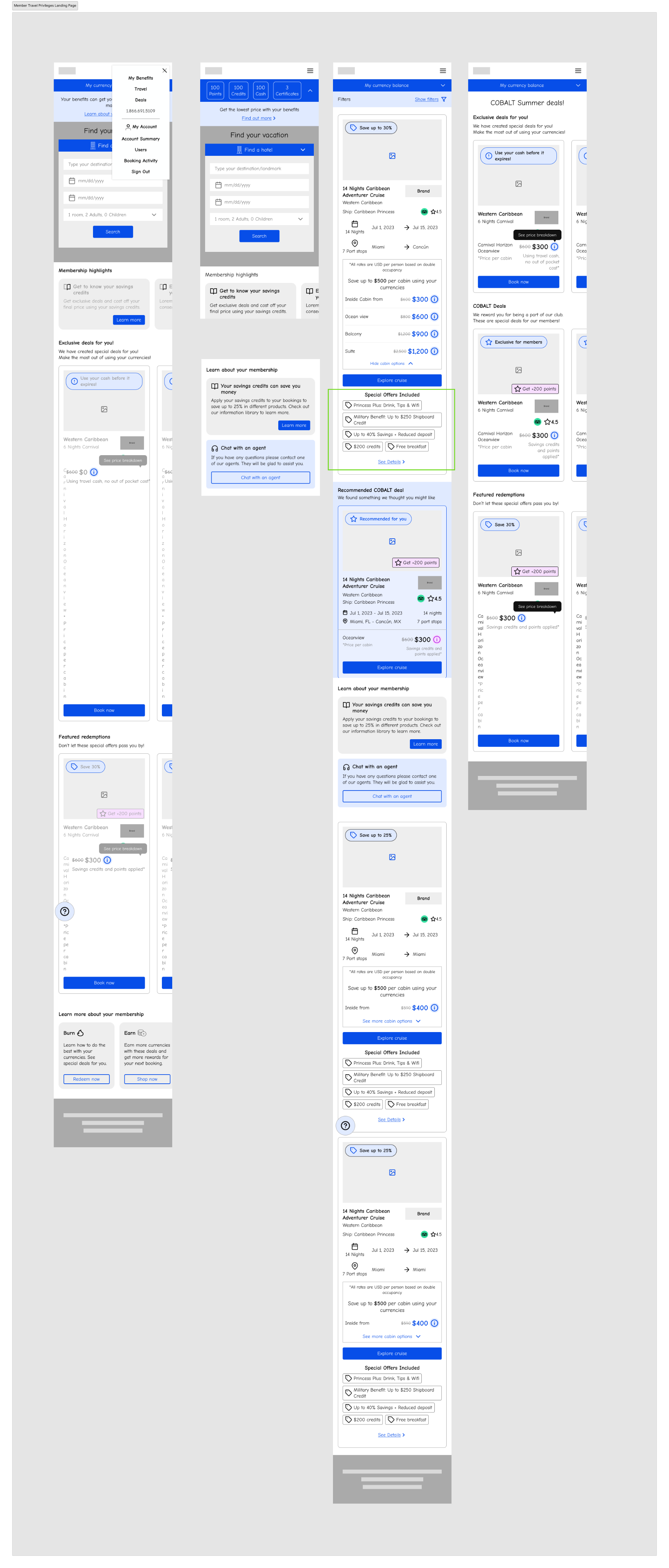
UX Methodology Innovation: We developed a collaborative design sprint model combining internal stakeholder knowledge with agency expertise. The pattern was collective collaboration sessions followed by offline agency work, then iterative review cycles. This approach ensured both domain expertise integration and design innovation.
Figure: Mid-fidelity designs
Technical Implementation & Design System
The solution required building a scalable design system supporting multiple Fortune 500 client brands while maintaining individual brand integrity and accessibility compliance.
Technical Excellence Achievements:
- Mobile-First Architecture: Complete platform redesign prioritizing 88% mobile user base with Safari Mobile optimization, resultant testing and bug reduction before it hits production
- Accessibility Leadership: Achieved WCAG 2.2 AA compliance while maintaining conversion performance excellence
- PCI Compliance Integration: Financial services compliance with user-friendly interface design and digital wallet
- Scalable CMS Platform: Self-service content management enabling client merchandising autonomy
- Real-time Analytics: GA4 integration with our logging and analytics platforms, comprehensive user journey tracking and A/B testing framework
- Research, Design, Iterations and Coded in ~ 6 months
Design System Innovation:
- Created white-labeled component library supporting multiple Fortune 500 clients with individualized branding while maintaining design consistency and development efficiency.
- Core patterns scale to all product types: Air, Car, Hotel, Resort, Homes and Cruises, with Marketing, Currency and Membership content customization supported.
- Usability tested and approved!
Measurable Impact & Business Transformation
The results exceeded stakeholder expectations and established a new benchmark for enterprise platform optimization.
Quantifiable Outcomes:
- $16M Monthly Revenue Growth: 80% conversion rate improvement directly attributed to UX optimization
- 26-Point SUS Improvement: User experience quality elevated from 56 (poor) to 82 (excellent) usability
- 2.2M+ MAU Platform Performance: Maintained optimal performance while serving enterprise-scale traffic for the 1st client
- Cross-Client Scalability: Framework successfully implemented across multiple Fortune 500 client implementations
Organizational Impact: The project established data-driven design as a core organizational capability, creating systematic approaches for ongoing optimization and building stakeholder confidence in UX investment ROI.
Strategic Lessons & Innovation
This project demonstrated several breakthrough principles that I've applied to subsequent enterprise transformations:
- System-Level Journey Thinking: Comprehensive user journey mapping reveals optimization opportunities that isolated touchpoint analysis misses entirely.
- Mobile-First Technical Strategy: Enterprise platforms must prioritize actual user behavior over legacy technical preferences, especially for financial services where trust and accessibility are paramount.
- Cross-Functional Integration Methodology: Complex enterprise projects require orchestrating technical excellence with business strategy, legal compliance, and stakeholder confidence building.
- Scalable Framework Development: Solutions must support current client needs while creating foundations for future growth and client onboarding efficiency.
- Evidence-Based Stakeholder Confidence: Systematic research and iterative validation builds organizational trust in UX investment, particularly after previous project failures.
Future Applications & Continued Impact
The success established this transformation methodology as a repeatable framework for enterprise platform optimization, with subsequent applications generating continued ROI across multiple client implementations.
The project proved that strategic UX research combined with technical excellence and cross-functional collaboration can generate immediate revenue impact while building sustainable competitive advantages for complex enterprise platforms.

Inspirations
Contact
Case Study 1: Transforming Enterprise Travel Benefits: How Strategic UX Research Generated $16M Monthly Revenue
Jump to a Section:
The Challenge That Everyone Missed
When I took over the USAA travel benefits platform project, the surface problem seemed straightforward: outdated design, low member utilization due to complexity resulting in low travel bookings. But deeper investigation revealed a perfect storm of systemic issues that previous teams had either overlooked or underestimated.
The platform served 4M+ monthly active users across Fortune 500 clients like USAA and American Express, yet conversion rates were stagnating. More critically, 88% of users were accessing the platform on mobile devices (60% on iPhone Safari), but the entire experience was optimized for desktop. A previous outsourced project had failed to deliver, burning budget and stakeholder confidence.
The Real Problem: This wasn't a simple refresh—it was a fundamental mismatch between user behavior and technical architecture, compounded by fragmented user journey documentation that missed critical upstream and downstream interaction opportunities for membership, marketing and booking travel.
“Travel inspirations and triggers start off-platform in marketing (digital and paper), social media, reminiscing, etc. and the journey needs to connect those triggers with inspirational and contextual queues to accelerate the purchase phases”
Original Site
New Design
Strategic Research & Discovery
Rather than jumping into visual design, I led a comprehensive research initiative that uncovered the true scope of transformation needed. Through systematic heuristic evaluation, user journey mapping, and cross-functional stakeholder interviews, and pages of notes from Account Management, we identified that the issues ran deeper than anyone realized.
Key Research Insights:
- Mobile Safari Optimization Needs: 60% of users were experiencing responsive design bugs specifically in Safari Mobile, the platform's primary browser
- Journey Fragmentation: Documentation covered isolated touchpoints but missed the complete user journey from pre-shopping engagement, such as digital marketing, through post-travel reflection
- Conversion Friction Points: Users abandoned at predictable moments due to hidden pricing & fees, unrefined navigation, and trust indicators
- Accessibility Barriers: Non-compliance was creating legal risk while excluding users with disabilities on contrast, keyboard navigation and screen readers
Figure: Understanding Landing page & Membership Engagement with Analytics
- Key Insight 1 - Users rarely went below the fold
- Key Insight 2 - Majority of users shopped on Mobile & Purchased on Desktop
- Key Insight 3 - Large traffic variance of Price Compare sessions vs. Checkout sessions
Technical UX Deep Dive: I designed a comprehensive user journey framework spanning 12 distinct phases: Pre-conditions, Pre-shopping, Inspire, Explore, Refine, Commit, Book, Confirm, Prepare, Travel, Reflect, and edge case handling. This systematic approach revealed interaction opportunities that previous teams had completely missed. The project release didn’t address them all but were incorporated them strategically into the Product Roadmap.
Figure: Journey Map Template for all UX activities as a starting point
- Template surfaces key emotional phases in the travel decision making
- Travel inspirations and triggers start off-platform in marketing (digital and paper), social media, reminiscing, etc. and the journey needs to connect those triggers with inspirational and contextual queues to accelerate the purchase phases
- At every point in the journey, is an opportunity to engage
Cross-Functional Execution Strategy
Success required orchestrating a complex transformation across Legal, Marketing, Sales, Product, Technology, and InfoSec teams while rebuilding stakeholder confidence after previous project failures.
Figure: Stakeholder workshop prioritization affinity on Membership Benefits, a Core Value Proposition
Project Architecture:
- Dual Leadership Role: Served as both Project Owner and active UX contributor
- Agency Partnership: Augmented internal team capacity (80% allocated to parallel initiatives) with external UX agency
- Iterative Validation: Implemented 3 rounds of research from low-fidelity to high-fidelity design validation
- Mobile-First Technical Strategy: Prioritized Safari Mobile optimization and responsive design excellence
- Enterprise scalability
UX Methodology Innovation: We developed a collaborative design sprint model combining internal stakeholder knowledge with agency expertise. The pattern was collective collaboration sessions followed by offline agency work, then iterative review cycles. This approach ensured both domain expertise integration and design innovation.
Figure: Mid-fidelity designs
Technical Implementation & Design System
The solution required building a scalable design system supporting multiple Fortune 500 client brands while maintaining individual brand integrity and accessibility compliance.
Technical Excellence Achievements:
- Mobile-First Architecture: Complete platform redesign prioritizing 88% mobile user base with Safari Mobile optimization, resultant testing and bug reduction before it hits production
- Accessibility Leadership: Achieved WCAG 2.2 AA compliance while maintaining conversion performance excellence
- PCI Compliance Integration: Financial services compliance with user-friendly interface design and digital wallet
- Scalable CMS Platform: Self-service content management enabling client merchandising autonomy
- Real-time Analytics: GA4 integration with our logging and analytics platforms, comprehensive user journey tracking and A/B testing framework
- Research, Design, Iterations and Coded in ~ 6 months
Design System Innovation:
- Created white-labeled component library supporting multiple Fortune 500 clients with individualized branding while maintaining design consistency and development efficiency.
- Core patterns scale to all product types: Air, Car, Hotel, Resort, Homes and Cruises, with Marketing, Currency and Membership content customization supported.
- Usability tested and approved!
Measurable Impact & Business Transformation
The results exceeded stakeholder expectations and established a new benchmark for enterprise platform optimization.
Quantifiable Outcomes:
- $16M Monthly Revenue Growth: 80% conversion rate improvement directly attributed to UX optimization
- 26-Point SUS Improvement: User experience quality elevated from 56 (poor) to 82 (excellent) usability
- 2.2M+ MAU Platform Performance: Maintained optimal performance while serving enterprise-scale traffic for the 1st client
- Cross-Client Scalability: Framework successfully implemented across multiple Fortune 500 client implementations
Organizational Impact: The project established data-driven design as a core organizational capability, creating systematic approaches for ongoing optimization and building stakeholder confidence in UX investment ROI.
Strategic Lessons & Innovation
This project demonstrated several breakthrough principles that I've applied to subsequent enterprise transformations:
- System-Level Journey Thinking: Comprehensive user journey mapping reveals optimization opportunities that isolated touchpoint analysis misses entirely.
- Mobile-First Technical Strategy: Enterprise platforms must prioritize actual user behavior over legacy technical preferences, especially for financial services where trust and accessibility are paramount.
- Cross-Functional Integration Methodology: Complex enterprise projects require orchestrating technical excellence with business strategy, legal compliance, and stakeholder confidence building.
- Scalable Framework Development: Solutions must support current client needs while creating foundations for future growth and client onboarding efficiency.
- Evidence-Based Stakeholder Confidence: Systematic research and iterative validation builds organizational trust in UX investment, particularly after previous project failures.
Future Applications & Continued Impact
The success established this transformation methodology as a repeatable framework for enterprise platform optimization, with subsequent applications generating continued ROI across multiple client implementations.
The project proved that strategic UX research combined with technical excellence and cross-functional collaboration can generate immediate revenue impact while building sustainable competitive advantages for complex enterprise platforms.